A week on a gulet is one of the most relaxed holidays you can have, but it is not a hotel stay. Space is limited, days are spent in and out of the water, and you will rarely need more than a swimsuit and a smile.
The short answer: for a gulet cruise, pack light summer clothes in a soft bag, at least two swimsuits, a hat, sunglasses, reef-friendly sunscreen, a light layer for the evenings, any personal medication, your passport or ID and some cash for paid bays and ports. On our gulet, towels, bed linen, snorkels, fins, a canoe and SUP boards are already provided, so there is no need to bring them.
This checklist is based on the questions our guests ask most before sailing from Fethiye. Feel free to print it and tick things off as you go.
Bring a soft bag, not a hard suitcase
Gulet cabins are comfortable, but storage is more compact than in a hotel room. A hard-shell suitcase cannot be folded away, so it ends up taking floor space for the whole week. A soft holdall or a large backpack can be squashed into a cupboard or under the bed.
The golden rule is to pack less than you think. Most guests spend the day in swimwear and the evening in something casual, and many go home with half their clothes unworn.
Blue cruise packing list: clothes
- 3–4 T-shirts, vests or light shirts (cotton, linen or quick-drying fabrics)
- 2–3 pairs of shorts or light trousers
- One or two smart-casual outfits for dinners ashore
- A light jumper, hoodie or windproof jacket for breezy evenings
- A sarong or cover-up to throw over swimwear
- Nightwear and enough underwear
- A long-sleeved, lightweight top for midday sun
Footwear
- Flip-flops or sandals: what you will wear most of the time
- Water shoes, handy for pebbly beaches and climbing in from rocks
- Light trainers for walks ashore or visits to ancient sites
Deck etiquette: on most boats people go barefoot on deck. Black-soled shoes and heels can mark the wooden deck and are not safe on a wet surface. Leaving your shoes at the gangway when you come back aboard is the easy habit to pick up.
Swim and sun essentials
- At least two swimsuits, so one can dry while you wear the other
- A wide-brimmed hat or cap
- Polarised sunglasses with a strap
- Reef-friendly sunscreen and a lip balm with SPF
- After-sun lotion or aloe vera gel
- Your own snorkel mask, if you prefer one for hygiene or fit (optional)
- A waterproof phone pouch
Why reef-friendly sunscreen?
Studies have linked certain chemical UV filters, notably oxybenzone and octinoxate, to coral bleaching. Non-nano mineral sunscreens based on zinc oxide or titanium dioxide are generally considered much less likely to harm marine life. Bear in mind that “reef-safe” has no legal definition, so check the ingredients list rather than the label on the front. Applying it 15–20 minutes before you swim also helps it stay on your skin rather than in the sea.
Health and toiletries
- Any regular medication, plus prescriptions, with a few days’ spare
- A seasickness remedy, chosen with your pharmacist or GP beforehand
- A small first-aid kit: plasters, painkillers, insect repellent
- Toiletries, ideally biodegradable
- Spare glasses or contact lenses
Seasickness: general advice
Hops between bays on the Turkish coast are usually short, but some people are sensitive to motion. Common advice is to arrive well rested, stay hydrated, look at the horizon and get plenty of fresh air. Reading or staring at a screen while under way can make things worse, and light, plain meals tend to sit better.
If you are thinking of taking medication, speak to a pharmacist or doctor before you travel. Some remedies need to be taken a few hours in advance and can cause drowsiness. This matters especially if you are pregnant, travelling with children or already taking other medicines.
Documents and money
- A passport valid for your whole trip, plus any visa your nationality needs for Turkey
- Booking details and our phone number
- Travel insurance documents
- Cash for paid bays, marinas, national park entrance fees and small purchases ashore
- A debit or credit card for towns and marinas
Free bays along the Turkish coast are included in the price. Paid bays, marinas and national park entrances are paid by guests, and small kiosks and beach cafés may not always take cards, so a little cash goes a long way.
Heading to the Greek islands?
On our Fethiye – Greek Islands route you cross a border, so passports are checked. Make sure yours is valid well beyond your travel dates, and check whether your nationality needs a Schengen visa. Rules depend on your passport and can change, so confirm with official sources and with us before you book.
Tech and power
- Phone charger and cable
- A power bank for shore trips and long days on deck
- A waterproof dry bag or phone pouch
- An action camera, if you have one
- A travel adaptor if your plugs are not the European two-pin type
For safety, cabin power is switched off during the cruise; you charge phones and devices at the sockets on the aft deck. With solar panels and a generator, there is power from early morning until late in the evening, and standard European chargers work. Guests from the UK and elsewhere should bring a suitable adaptor. Phone signal can drop in some secluded bays, which many guests end up seeing as a bonus.
What is already on board
This is the part that lightens your bag the most. On our gulet the following is included and waiting for you:
- Bed linen and towels
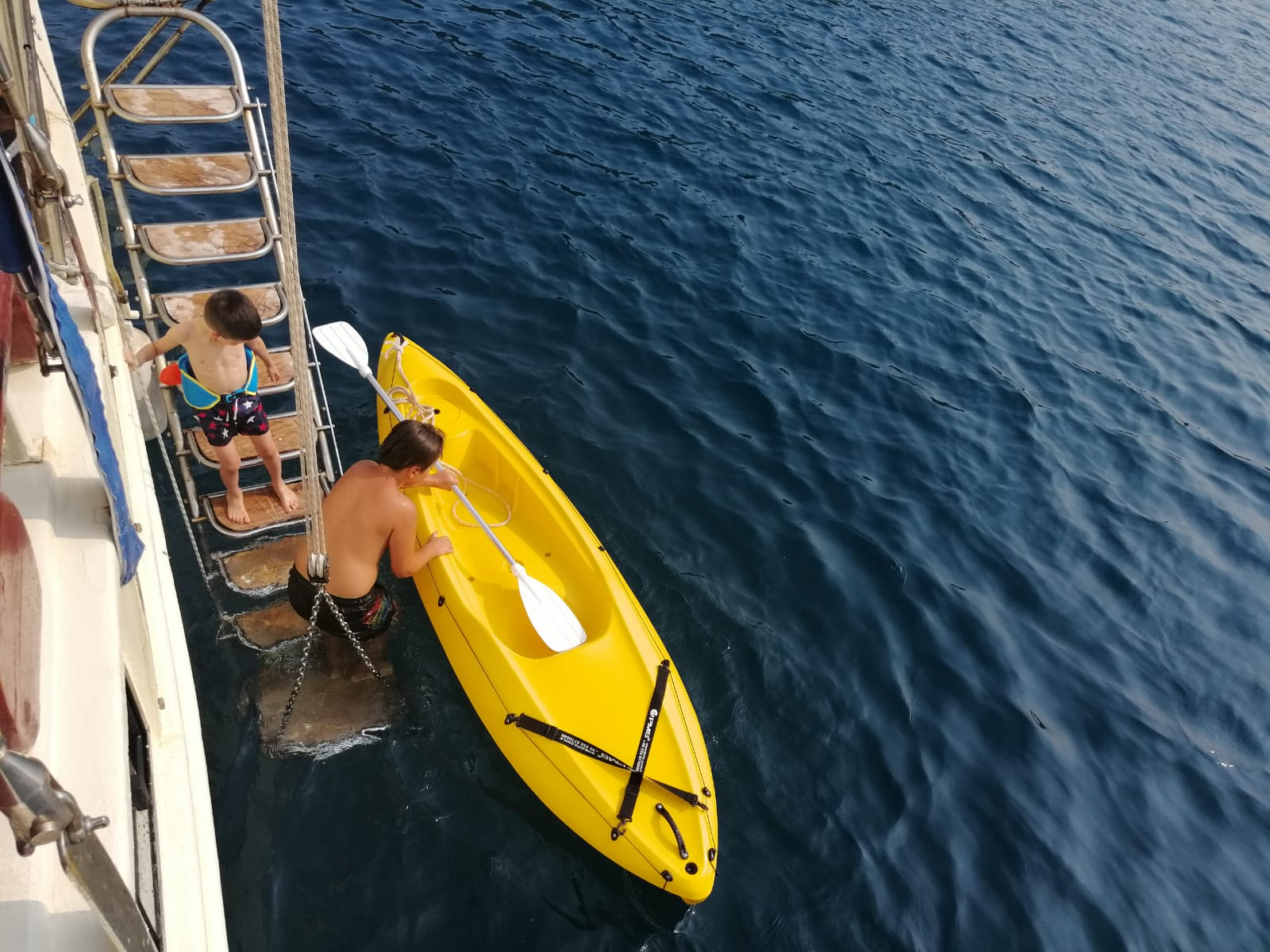
- A canoe and SUP boards
- Snorkels, fins and pool noodles
- A shower and WC in every cabin, hot water around the clock, charging sockets on the aft deck and a hairdryer you can borrow
- 16 sun loungers, separate fridges, an ice maker and a music system
- All meals, cooked on board by our crew
So there is no need to pack beach towels, fins or inflatables. If you prefer your own mask, bring it; that is purely about hygiene and fit.
Food and drinks rules
- Private charter: we can buy the provisions, or you are welcome to bring your own food and drinks.
- Cabin charter: we buy the food; drinks are sold on board and outside drinks cannot be brought on.
What not to bring
- Large hard-shell suitcases
- Black-soled shoes or heels
- Piles of outfits and heavy books
- Valuable jewellery, which is very easy to lose in the sea
- Large, high-wattage hairdryers: for fire safety they cannot be used in the cabins. We have a hairdryer on board you can borrow; if you bring your own, make it a small one and use it at the aft-deck sockets
- Your own drinks, if you are on a cabin charter
How the season changes your packing
April – May
Days are mild and the countryside is green, but the sea is still cool. Pack a warmer layer for evenings and a light rain jacket. If you plan long swims, a rash vest or thin wetsuit top may help.
June – September
This is the hottest part of the year and the sea is at its warmest. Sun protection comes first: a hat, a long-sleeved top, plenty of sunscreen and plenty of water. A light layer is usually enough even in the evening.
October – November
The sea holds on to its summer warmth for a while and the bays are quieter. The weather is more changeable, though, and rainy days become more frequent. Pack layers, a windproof jacket, long trousers and closed shoes. Dates outside the April–November season can be arranged on request.
Choosing your route
Routes along the Turkish coast, such as Fethiye – Göcek, keep sailing times short and paperwork simple. Longer or cross-border itineraries call for a bit more planning. You can compare all the options on our routes page. The nearest airport is Dalaman, around 45 minutes from Fethiye harbour; transfers are not included but can be priced in advance on request.
Questions before you sail?
We are the Yılmaz family, and we have been welcoming guests for over 20 years, with family as captain and crew. If anything on this list is unclear, or you would like a quote for your dates, group size and route, call or WhatsApp us on +90 506 389 49 10, or get in touch via our contact page.
Frequently asked questions
Do I need to bring towels on a gulet cruise?
Not on our gulet. Bed linen and towels are included. You may still want a thin beach towel or sarong for going ashore.
Can I charge my phone on a gulet?
Yes, at the sockets on the aft deck. For safety, cabin power is switched off during the cruise, but thanks to solar panels and a generator there is power from early morning until late evening. Bring a power bank for trips ashore and a travel adaptor if your plugs are not the European type.
Can we bring our own alcohol on a gulet?
It depends on the charter type. On a private charter you can bring your own food and drinks. On a cabin charter drinks are sold on board (cash only) and outside drinks are not allowed.
How much cash should I take on a blue cruise?
Enough for paid bays, marinas, national park entrance fees and small purchases ashore, as these are not included and some small businesses do not take cards.
What can I do about seasickness on a gulet?
Looking at the horizon, getting fresh air, staying hydrated and eating light meals are commonly recommended. If you are considering medication, ask a pharmacist or doctor before you travel.
Plan your blue cruise with us
Ask us about dates, routes and prices. We usually reply on WhatsApp the same day.